
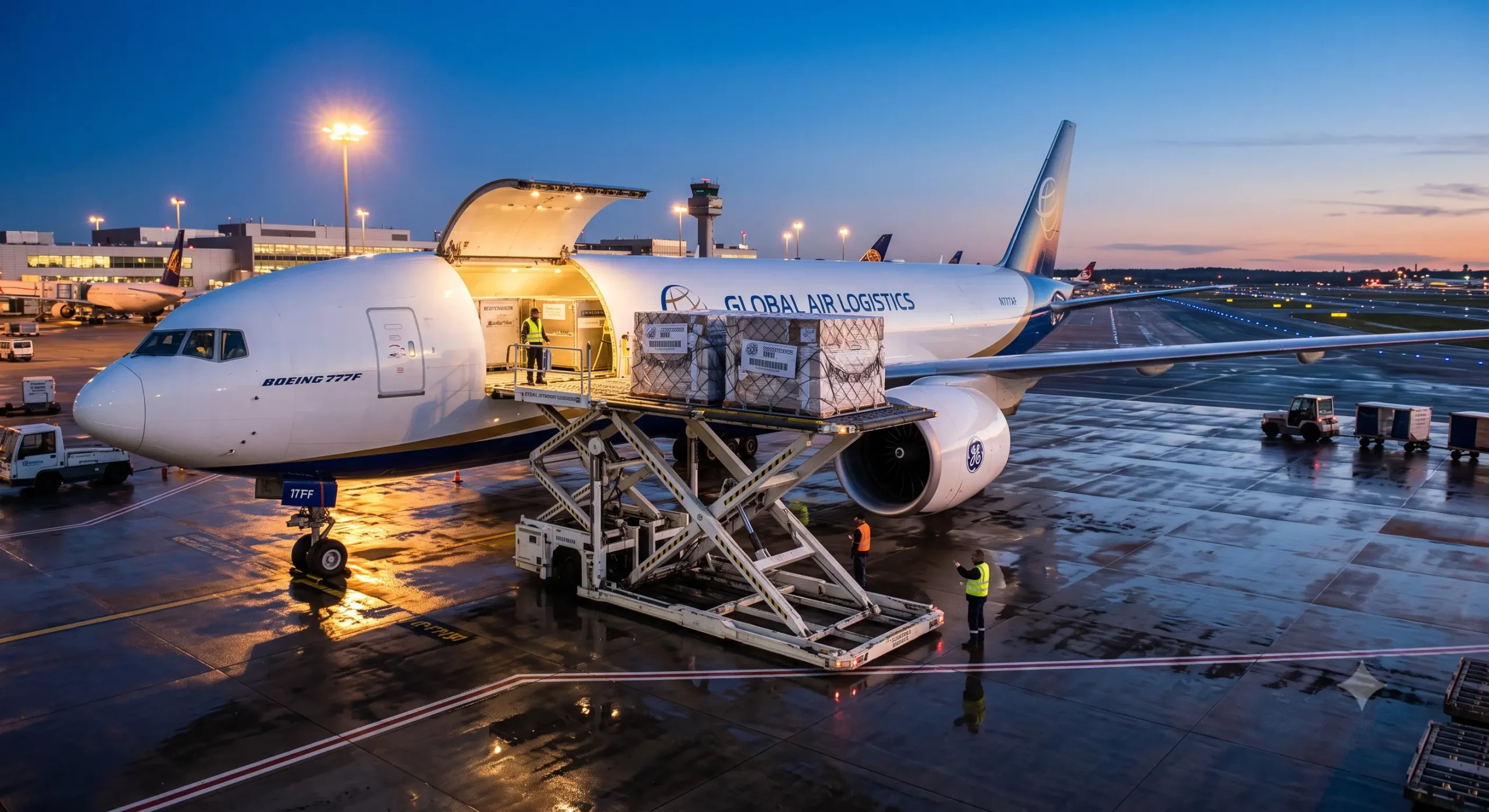
The Basics of Air Freight Pricing
Air cargo is built on speed, but airline pricing depends directly on how much space and lift capacity a consignment demands. Airlines bill shippers based on Chargeable Weight—which is the higher value between Gross Weight and Volumetric (Dimensional) Weight.
Calculating Volumetric Weight
Lightweight goods that occupy significant physical space (such as apparel, electronics packaging, or automotive components) require volumetric calculations:
-
Dense Cargo: If a small wooden box weighs 300 kg but has a volumetric weight of only 120 kg, you pay for the 300 kg gross weight.
-
Bulky Cargo: If a large pallet weighs 80 kg gross, but its dimensional formula equals 210 kg, you pay for the 210 kg chargeable weight.
Tips to Reduce Air Cargo Costs
-
Optimize Packaging: Remove unnecessary air pockets and excess void fill from cartons.
-
Standardize Pallet Sizes: Align cargo to fit aircraft belly-hold or main-deck pallet dimensions.
-
Select Consolidated Air: For urgent but not emergency shipments, scheduled consolidated air services deliver optimal per-kilogram rates.